Upskilling: An Important Currency That Buys SMEs a Future in the Digital Age
Upskilling is the key investment that empowers SMEs to fully leverage technology, stay competitive, and thrive in ASEAN’s fast-evolving digital economy.

For SMEs, the gap between sustainability awareness and action is not just a statistic. It is a competitiveness issue that could decide who thrives and who gets left behind. The UOB Business Outlook Study (BOS) 2025 (Singapore) shows that over 80% of companies in Singapore now consider sustainability important — up 10% from 2023. Yet only 49% have adopted sustainability practices, even with progress from 38% last year.
Education and awareness have laid the groundwork. SMEs now recognise the importance of sustainability and the risks of ignoring it. But knowledge by itself does not drive change. Many SMEs remain stuck in what might be called the “comfort zone of commitment”, making sustainability statements without embedding practices into daily operations.
The hesitation likely stems from three main barriers:
Hesitation may feel safe, but it carries bigger risks. SMEs that fail to act will face higher compliance costs, shrinking market access, and reputational risks. For instance, a 2024 Schneider Electric survey found that 78% of small businesses in Singapore have lost business due to stringent Greenhouse Gas (GHG) compliance issues. 95% of respondents believe it is becoming harder for smaller companies to supply larger companies due to increasing environmental and GHG emissions requirements.
At UOB FinLab, we recognise that awareness without action limits SMEs’ growth potential. That is why we design programmes that move businesses from intent to measurable result. One example is our flagship GreenTech Accelerator (GTA), which connects promising with SMEs and corporates to co-create deployable solutions. By bridging the gap between innovators and businesses, GTA helps SMEs overcome barriers of cost, complexity, and ROI uncertainty. The takeaways from these pilots speak for themselves:
Lesson 1: Sustainability Reduces Emissions and Improves Efficiency
Smart Tradzt worked with DKSH, a Swiss holding company specialising in market expansion services, to run a Life Cycle Analysis (LCA) across its cold chain distribution, from cold room energy use to fuel consumption. Together with global biopharmaceutical company AbbVie, DKSH then piloted a reusable packaging solution to replace single-use materials.
The results were significant:
DKSH was able to quantify environmental savings while reinforcing operational efficiency and supplier accountability by embedding LCA insights and shifting to reusable packaging.
Lesson 2: Sustainability Unlocks Hidden Cost Savings
Circular Unite partnered with UOB’s Corporate Real Estate Services (CRES) team to conduct a four-day waste audit at UOB Plaza. Waste was sorted, weighed, and categorised to uncover recycling and diversion opportunities. The audit uncovered clear opportunities to cut costs, reduce emissions, and recover additional value through better recycling practices.
Beyond financial savings, the insights provided a detailed picture of waste patterns across nine categories, enabling UOB CRES to design targeted solutions such as food waste digesters, carton box cage, and tenant-specific recycling initiatives. Time-based analysis also ensured that the waste facility is managed efficiently with no overflow.
These data-driven insights now inform UOB’s long-term waste reduction strategies and strengthen its sustainability reporting with actionable, real-world measures.
These examples highlight a critical truth: measurable outcomes are possible, but only when leaders see sustainability as a competitive advantage, not just a compliance exercise.
Leaders set the tone. They decide whether sustainability sits on the sidelines or becomes integrated into procurement, product design, and daily operations. Those with foresight will capture the benefits: reduced costs in the long term, stronger brand reputation, access to green financing, and entry into new markets. Those without will struggle to keep pace.
No SME needs to make this journey alone. BOS 2025 shows that SMEs increasingly see the value of partnerships — 28% identify connections to industry peers and ecosystem partner as a top strategy for building resilience. Ecosystems provide the knowledge, tools, and peer support to turn commitments into measurable action.
At UOB FinLab, we believe ecosystems are the bridge between knowing and doing SMEs gain the resources to act with confidence by working with financial institutions, government bodies, solution providers, and communities.
UOB is committed to enabling SMEs to embed sustainability into their business models. UOB was recently appointed a SkillsFuture Queen Bee, tasked with uplifting SMEs through capability-building and upskilling. To fufil this role, UOB leverages its strategic community enabler, UOB FinLab, which translates this mandate into action through programmes and partnerships that connec SMEs to knowledge, solutions and networks.
One such initiative is the SME Elevate Programme, built around three capability pillars — digital, financial, and sustainability. Within this sits the flagship Sustainability Innovation Programme (SIP), which equips SMEs with curated workshops, expert guidance, and peer learning to embed sustainability into their operations.
These programmes move SMEs beyond pledges to deliver measurable outcomes whether that means reducing emissions, cutting costs, or opening doors to new opportunities.
The sustainability conversation has matured. Awareness is no longer the challenge; execution is. For SMEs, the path forward is clear: move from intent to measurable action, and do so within an enabling ecosystem.
The BOS 2025 (Singapore) shows that awareness is high. The next leap is action. It is crucial that leaders recognise this now: sustainability is not simply a compliance requirement — it is a competitive advantage that will define the next decade of growth.
Stay up to date by following us on LinkedIn and subscribe to our newsletter.
Upskilling is the key investment that empowers SMEs to fully leverage technology, stay competitive, and thrive in ASEAN’s fast-evolving digital economy.
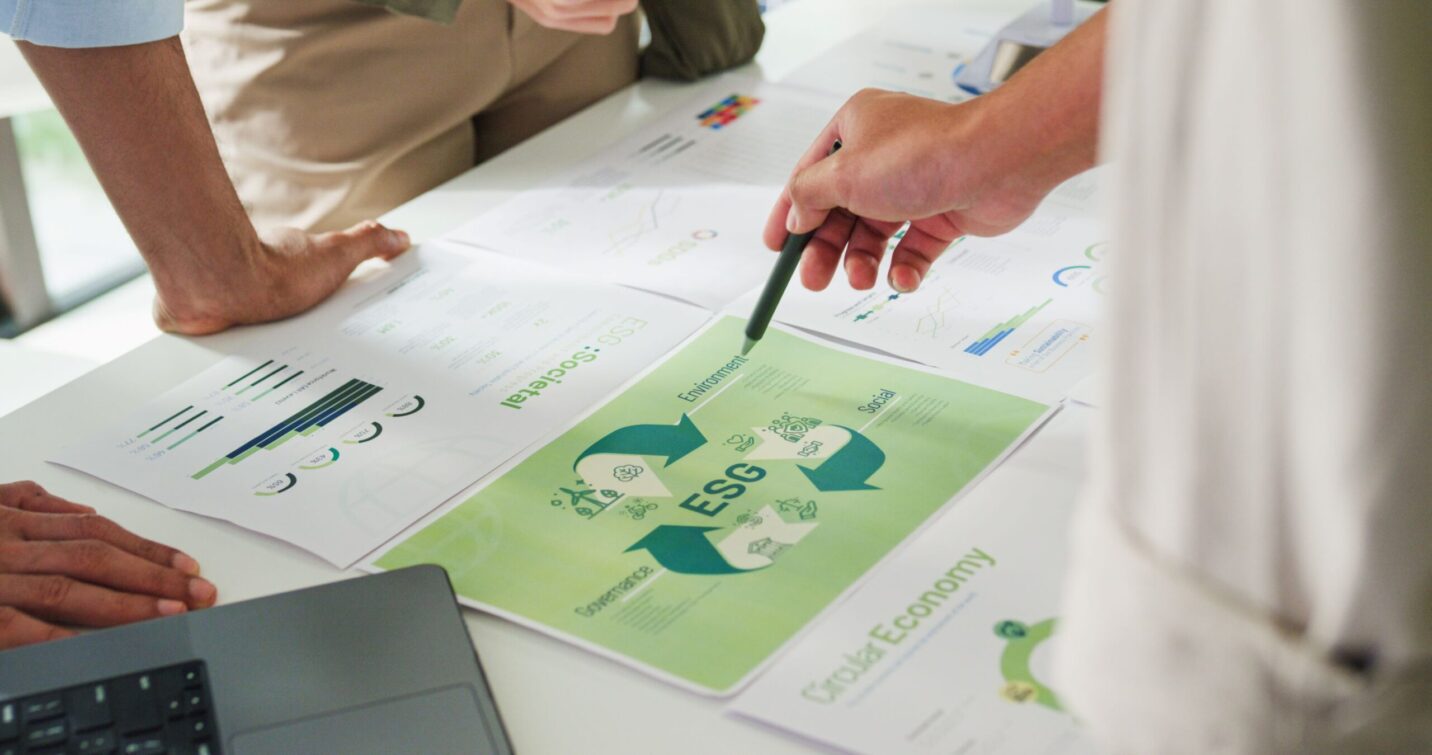
Sustainability reporting isn’t just compliance, it’s a growth strategy. It builds trust, wins bigger customers, and drives efficiency. The UOB FinLab helps SMEs start small and scale through its community and programmes, including the SME Elevate Programme and the Sustainability Innovation Programme (SIP).

The GreenTech Accelerator Thailand drives sustainability through pilots in energy, waste, agriculture, and building maintenance—delivering cost savings, improved recycling, reduced resource use, and AI-driven efficiency for measurable environmental impact.

Designed for business owners to enhance their digital capabilities through practical learning, this programme takes businesses to the next level.
Bridge ideas and innovation, subscribe to the FinLab Connect now!